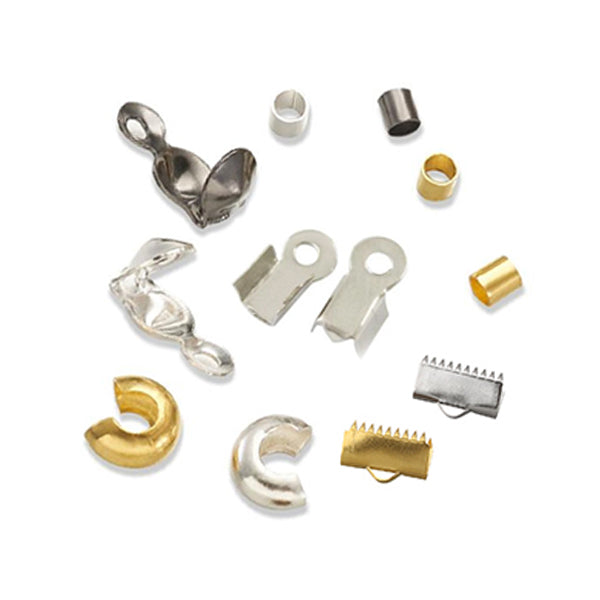
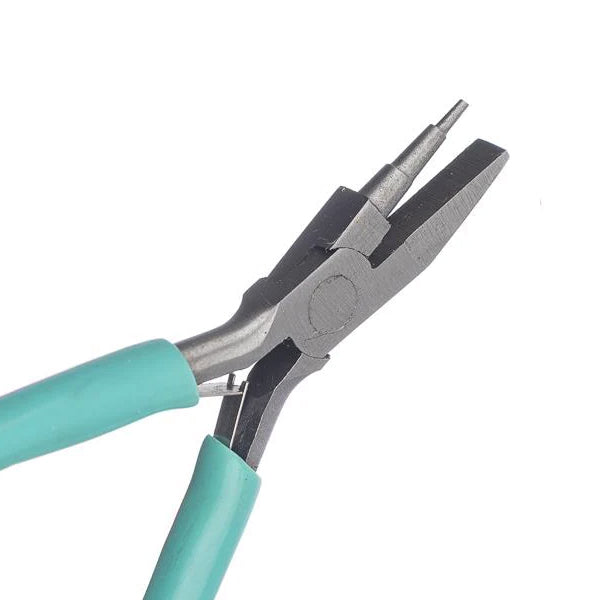
Shape a compatible crimp into a connection on beading wire.
Reach for it when: Finishing a strung necklace or bracelet with crimps.
A useful tip
Match the wire, crimp and tool sizes. Follow the tool’s sequence, then check the finished connection; simply flattening every crimp is not a universal substitute.
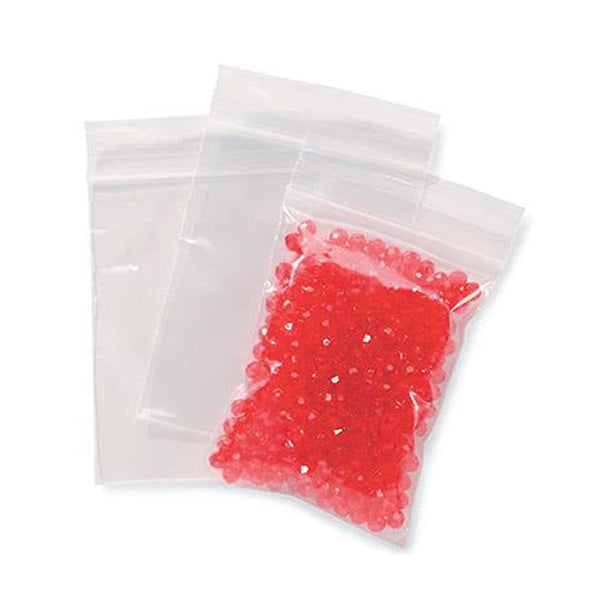
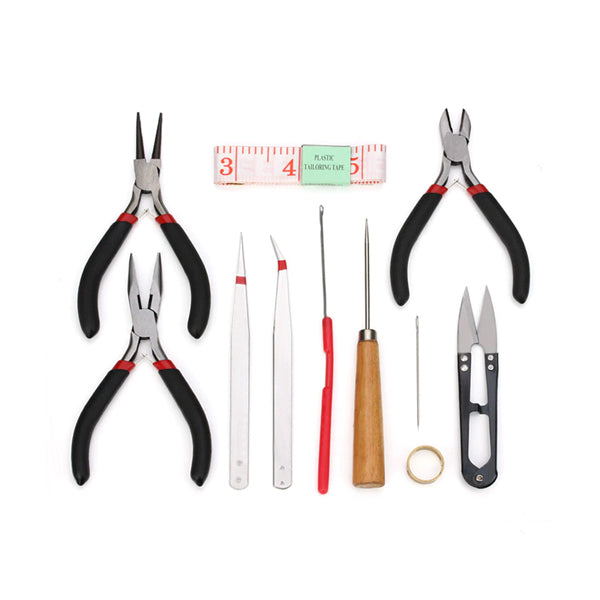
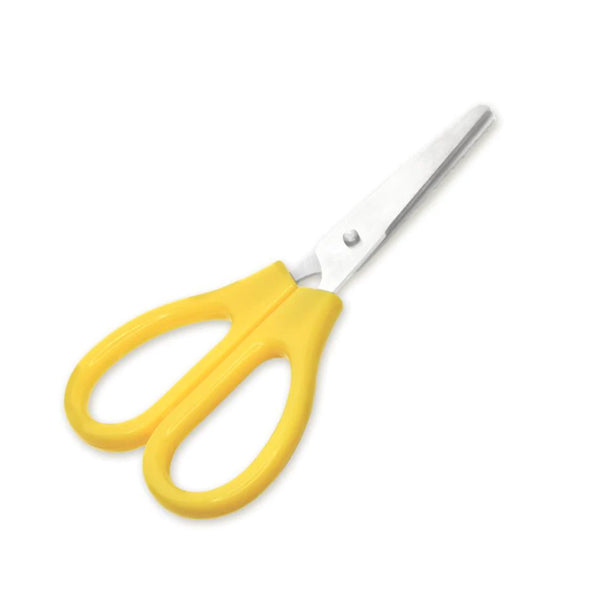
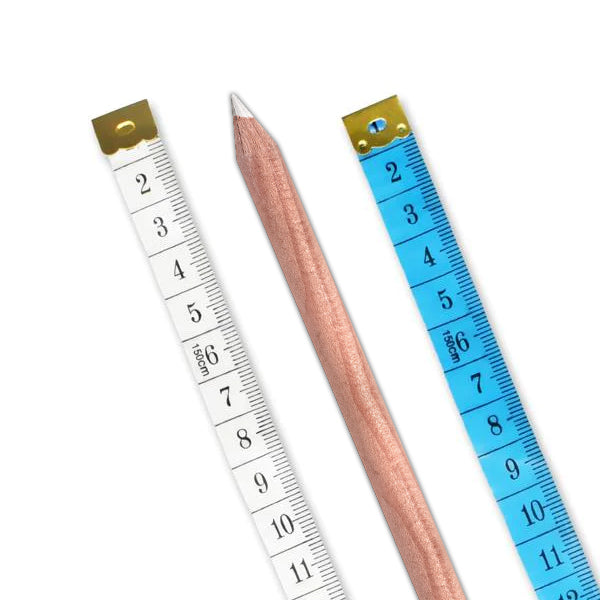
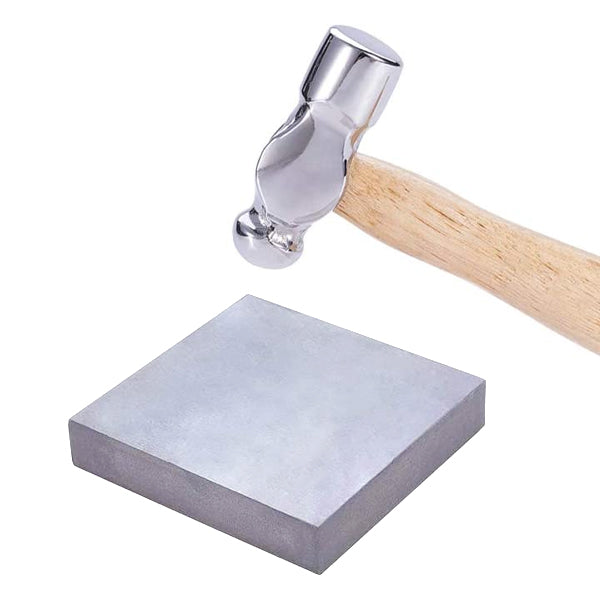
Bead mat or board, bead stoppers, suitable scissors or cutters, and finishing tools matched to your cord or beading wire.
Wire loops and earrings
Round-nose pliers, chain-nose or flat-nose pliers, and cutters rated for the wire. A 1-Step Looper is an optional helper for repeated simple loops.
Seed bead weaving
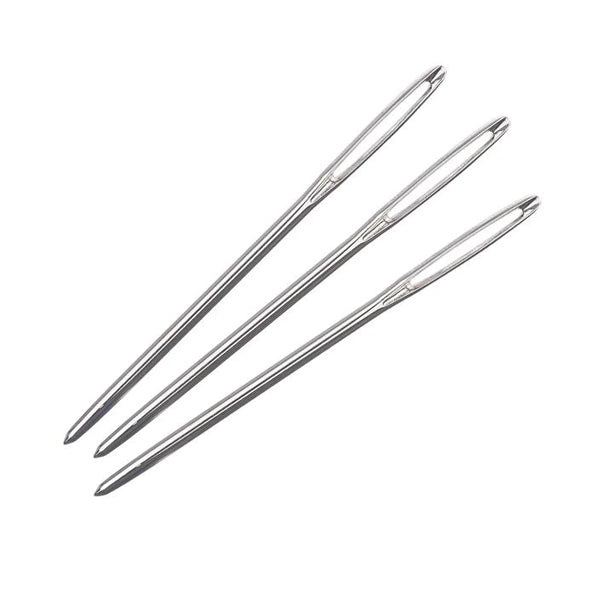
Suitable beading needles, thread scissors, a bead mat and good lighting. A sorter helps keep several colours apart.
Knotted pearls or beads
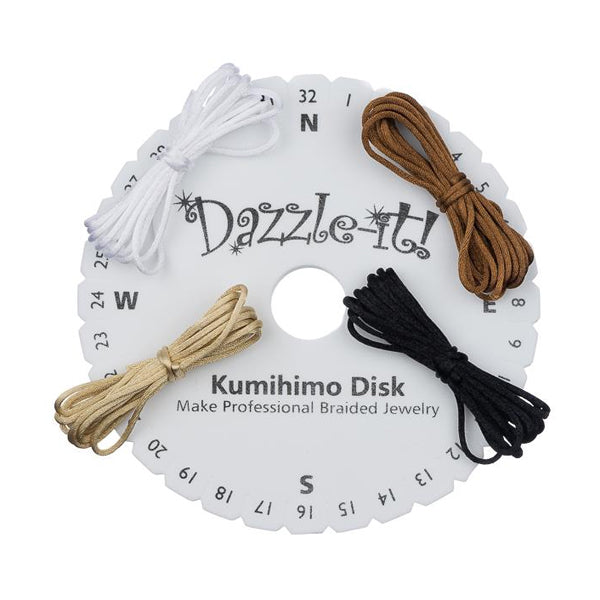
Compatible cord and beads, scissors, and a beading awl or knotting tool.
Loom beadwork
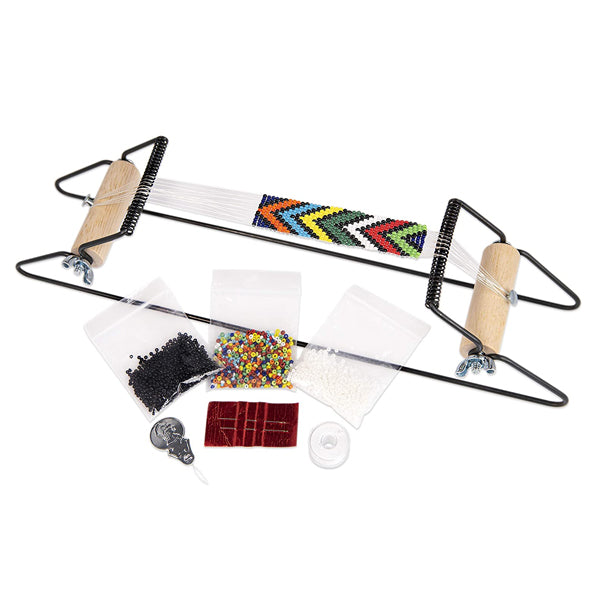
A loom with enough working width, compatible needles and thread, seed beads, scissors and a bead mat.
Memory-wire jewellery
Dedicated memory-wire cutters and suitable end-loop pliers or the maker’s recommended end caps. Ordinary soft-wire cutters can be damaged by memory wire.
06
Small habits, better results
Protect the finish
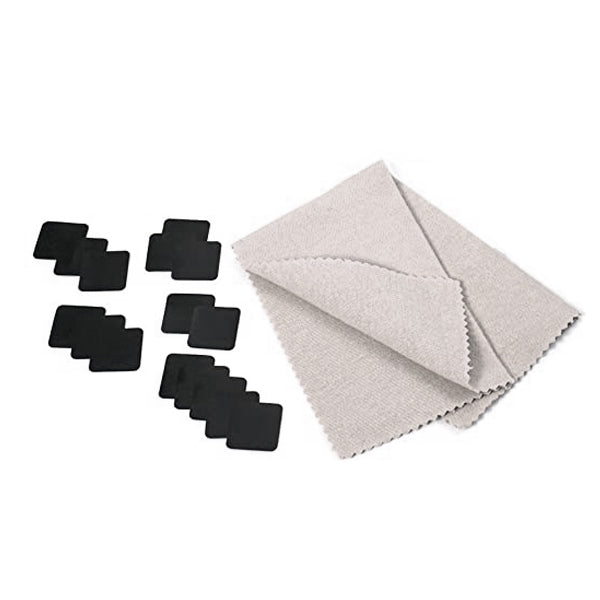
Use the lightest pressure that does the job. Keep jaws clean and test on spare wire when working with a delicate finish.
Keep cutting edges sound
Respect each cutter’s material and gauge limits. Store tools dry and replace or service damaged tools.
Work with care
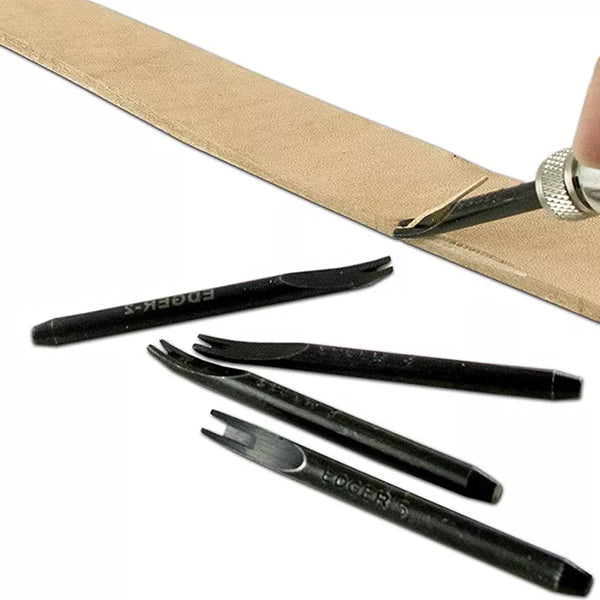
Protect your eyes when cutting wire or using a reamer. Control loose wire ends, keep sharp points away from your hands and store tools safely.
Keep building your skills with our related guides.
Product Descriptions: i-Bead Inc. strives for accurate product information, but errors may occur. Product availability and specifications, like size, are subject to change.
Product Images: Images are for representation purposes; actual products may vary in appearance due to display settings or manufacturing differences.
Copyright & Intellectual Property: All content on the Website is owned by i-Bead Inc. or its licensors. Users are granted a limited, non-commercial license to view and print content for personal use but cannot reproduce or distribute it without permission.
Trademarks: The i-Bead name and logo are trademarks of i-Bead Inc. Unauthorized use of trademarks is prohibited.
Use of the Website: Users must comply with laws and the Terms. Account creation may be required for certain services. Users are responsible for account security and cannot engage in harmful behavior or unauthorized access.
Pricing & Availability: Prices are listed in Canadian Dollars (CAD) and are subject to change. Additional charges for taxes, shipping, and duties may apply. Out-of-stock products may be removed or delayed.
Limitation of Liability: i-Bead Inc. is not liable for any indirect damages, and the website is provided "as is" without warranties.
Privacy & Data Protection: The use of personal data is governed by the company’s Privacy Policy, which users should review.
Indemnification: Users agree to defend and hold i-Bead Inc. harmless from any legal issues arising from their use of the site or violation of the Terms.
Modifications: i-Bead Inc. can update these Terms at any time. Changes will be effective upon posting.
Governing Law: The Terms are governed by the laws of Ontario, Canada, and any disputes will be resolved in Ontario courts.
Contact Information: For questions, users can contact i-Bead Inc. at their address or via email or phone.
In-Store Purchases: Items can be returned within 30 days with the original receipt for an exchange, store credit, or refund. Must be unopened and in original condition.
Online Purchases: Returns allowed within 30 days of receiving your order. Prior authorization required. Items must be unopened and in original condition.
Non-Returnable Items: Sale items, opened packages, broken strands, cut items (e.g., fabric, ribbon, rhinestone banding, etc), books, patterns, and special orders cannot be returned.
Restocking Fee: Returns after 30 days incur a 20% restocking fee. Clearance/discontinued items cannot be returned after 30 days. Returns initiated beyond 90 days are not eligible for a return or exchange.
Damaged/Defective Items: Contact customer service within 48 hours. Return shipping will be covered, and you can request a refund or replacement.
Return Instructions: Include the reason for the return and your order details. We recommend using a traceable shipping carrier. Returns must be prepaid, and customs fees are not covered.
Refund Process: Refunds will be issued after inspection, minus shipping costs, and may take 1-2 weeks to process.
For returns, the items must be in their original, unopened condition.
Shipping Policy
Shipping rates, eligibility, discounts and exclusions are explained in our Shipping Policy. Available shipping methods and applicable charges are shown at checkout.
Stamped Envelope Shipping — Untracked and Uninsured
Important: Read these limitations before selecting this lower-cost shipping option. Stamped Envelope Shipping uses Canada Post Lettermail, not a tracked parcel service.
Eligibility: Available only for eligible small, lightweight orders delivered within Canada, with a maximum of 10 items and an order value of no more than $24.99 CAD. The complete order must meet the requirements, including Canada Post's maximum Lettermail dimensions of 380 × 270 × 20 mm and maximum weight of 500 g. Having one eligible product in your cart does not mean the entire order qualifies. This shipping method appears at checkout only when the order is eligible.
No tracking or delivery confirmation: A tracking number is not provided. Once the envelope has been mailed, we cannot track its location or independently confirm when it is delivered.
No carrier insurance: Stamped Envelope Shipping does not include coverage for loss or damage, and no insured shipping claim is available through this service. Insurance associated with parcel shipping does not apply to stamped envelopes.
Delivery times are not guaranteed: Lettermail may be slower than expedited parcel shipping. Depending on the destination and postal conditions, delivery may take several weeks.
Customer acknowledgment: By selecting Stamped Envelope Shipping at checkout, you acknowledge that you are choosing an untracked and uninsured method and accept its service limitations and associated risks of delay, loss or damage.
If you want tracking, delivery confirmation or available carrier insurance, select an eligible tracked parcel shipping option instead.
Orders delivered within Canada: Applicable GST/HST is calculated based on the delivery province or territory. Please see our Sales Tax Policy for current rates.
First Nations tax relief: Eligible customers may qualify for GST/HST relief. Please review our Native Status Cards policy for eligibility and application requirements before ordering.
U.S. orders: Shipping to U.S. addresses is temporarily suspended.
International orders (outside Canada and the U.S.): We do not charge Canadian GST/HST on goods shipped outside Canada. Destination duties and taxes may apply and are the recipient's responsibility.
i-Bead Inc.'s Privacy Policy outlines how they collect, use, and disclose personal information. They gather data directly from users (e.g., contact details, order info, payment info) and through tracking technologies (e.g., cookies). This data is used for order processing, marketing, security, and customer support. The company may share data with third-party vendors and partners for service fulfillment, marketing, and legal compliance. Users can access, correct, or delete their data, and opt-out of marketing communications. The policy also covers data security, retention, and international transfers.
Acknowledgment of Terms and Shipping Conditions
By proceeding with checkout, you acknowledge and agree to i-Bead Inc.'s Terms & Conditions and the applicable policies linked above. Delivery estimates are not guarantees; weather, holidays, postal disruptions, and other carrier-related circumstances may cause delays. Shipping services differ in whether they include tracking, delivery confirmation and insurance, so please review the method you select at checkout and our Shipping Policy.